
The 2024 Annual Campaign of the Setec Foundation focused on the theme: “Excess or scarcity of water linked to climate disruption.”
Caritas Kaolack was selected as the winner at the end of 2024 for a comprehensive three-year project supporting the transition of four villages to agroecology, through a support approach adapted to the local context.
Overall Program
Objectives:
-
Promote the transition from rainfed subsistence farming to modern, entrepreneurial agriculture that is more resilient and less exposed to climate hazards.
-
Strengthen food sovereignty.
Intervention Strategy:
-
Approach at the territorial and ecosystem level (watershed).
-
Consider estuarine and landscape scales to spatialize and fully understand the challenges.
-
Integrate human needs into ecosystem conservation by involving communities at the core of rehabilitation and sustainable protection actions.
-
Promote synergy, complementarity, and inter-learning among stakeholders: to ensure collective ownership and the sustainability of ecosystem restoration actions, it is essential to foster connections among all relevant actors, both within and outside the territory.
Expected Results after Three Years for the Entire Project:
-
Agricultural and commercial practices of producers are strengthened.
-
Pilot reforestation and runoff optimization structures are operational, with sustainable management ensured.
-
Family farms (EAF) are empowered through technical and organizational support for farmers’ organizations.
-
Local stakeholders are strengthened technically and organizationally for resource management, natural resource stewardship, and ecosystem restoration.
-
General awareness of current and future climate change issues is achieved through cross-cutting, participatory, and multi-scale sensitization.
-
Local actors take ownership of climate change challenges through participatory diagnostics and territorial planning processes, supported by the research community.
Impacts
Environmental:
-
Water retention infrastructures (ponds) improve water availability and biodiversity, including the return of migratory fauna.
-
Anti-erosion structures have shown positive impact from the first rainy season.
-
Transition to agroecological techniques (mulching, runoff management, tree reintroduction, crop diversification).
Social and Societal:
-
The project helped structure and strengthen civil society, particularly four women’s farming groups, by securing land (in agreement with village chiefs), protecting market gardening areas, and supporting nearly 274 women in their initiatives.
-
Significant social engineering work was carried out by Caritas Kaolack to obtain local authorities’ and chiefs’ support. This complex, often invisible work—especially given recent political changes in Senegal—ensures the initiative contributes to lasting changes aligned with local development plans.
Role of the Setec Foundation
The Setec Foundation supports this project with €41,765, allocated to rehabilitating natural water retention areas in biodiversity reserves and grazing zones. This funding enables the implementation of pilot reforestation and runoff optimization structures to ensure sustainable use.
Rehabilitation requires strong social engineering, awareness-raising, and small-scale pilot implementation. By the rainy season, communities will notice the presence of migratory birds, easier water access for livestock, and water availability for up to seven months during the dry season.
Implementation steps include:
-
Joint selection of pilot sites and technical, environmental, and financial feasibility studies.
-
Mobilization of local resources (materials, human, and/or financial).
-
Community engagement to demonstrate the benefits of water conservation infrastructures through meetings, film debates, and site visits (approximately 390 people).
-
Training and application for local actors on development techniques via participatory work sites.
-
Continued training to explain the water cycle and the links between precipitation, soil, subsoil, and the importance of water for communities and ecosystems.
-
Implementation and monitoring of construction works, including excavation of clay layers, pond deepening, and bottom refinement.
-
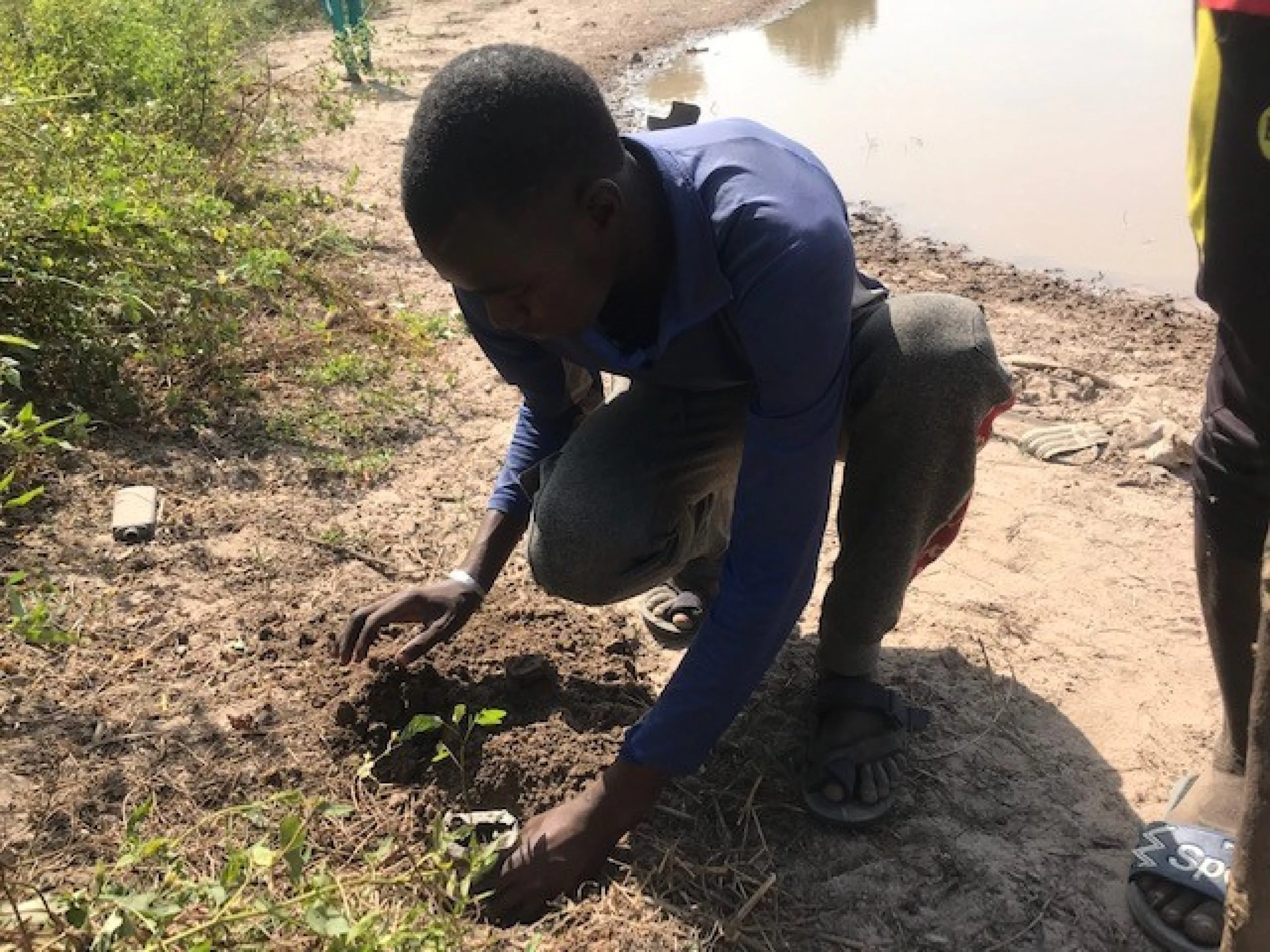
Community involvement in reforesting retention ponds.
Project supervision:
Our collaborator, Oumou Diakhoumpa, Setec IA in Senegal, serves as project sponsor and ensures the Foundation’s local oversight.
Updates
-
Identification of two former quarry sites
-
Community awareness on gullies in two villages
-
Establishment of management committees in both villages
-
Reforestation planning
-
Reforestation of 120 casuarina trees in the other two villages
-
Installation of fascines in one gully (vetiver)