The association Action for Sustainable Development has been selected as a laureate of the 2025 Annual Campaign of the setec Foundation for its project “Supporting the empowerment of women and youth in the North through the adoption of sustainable and climate‑resilient agricultural practices,” implemented in the commune of Ngong, in the Northern Region of Cameroon.
The project aims to strengthen the food sovereignty of women and young people in Ngong through soil regeneration, the valorization of local farming knowledge, and the dissemination of agroecological practices adapted to the Sahelian climate.
Context and project implementation
The project addresses a major challenge affecting the rural commune of Ngong: the progressive degradation of soils, declining agricultural yields, and rising food insecurity, all exacerbated by climate change and the economic fragility of smallholder farmers—particularly women and youth. In this Sahelian context already severely affected by the loss of agricultural biodiversity, the initiative directly supports 200 farmers—70% of whom are women and young people—and indirectly benefits around 800 inhabitants across two pilot villages. Its ambition is clear: strengthen community autonomy and resilience through the adoption of sustainable agroecological practices, the valorization of traditional knowledge, and the development of short marketing circuits.
A project pathway designed to anchor agroecology over the long term
Phase 1 – Launch and initiation: building foundations
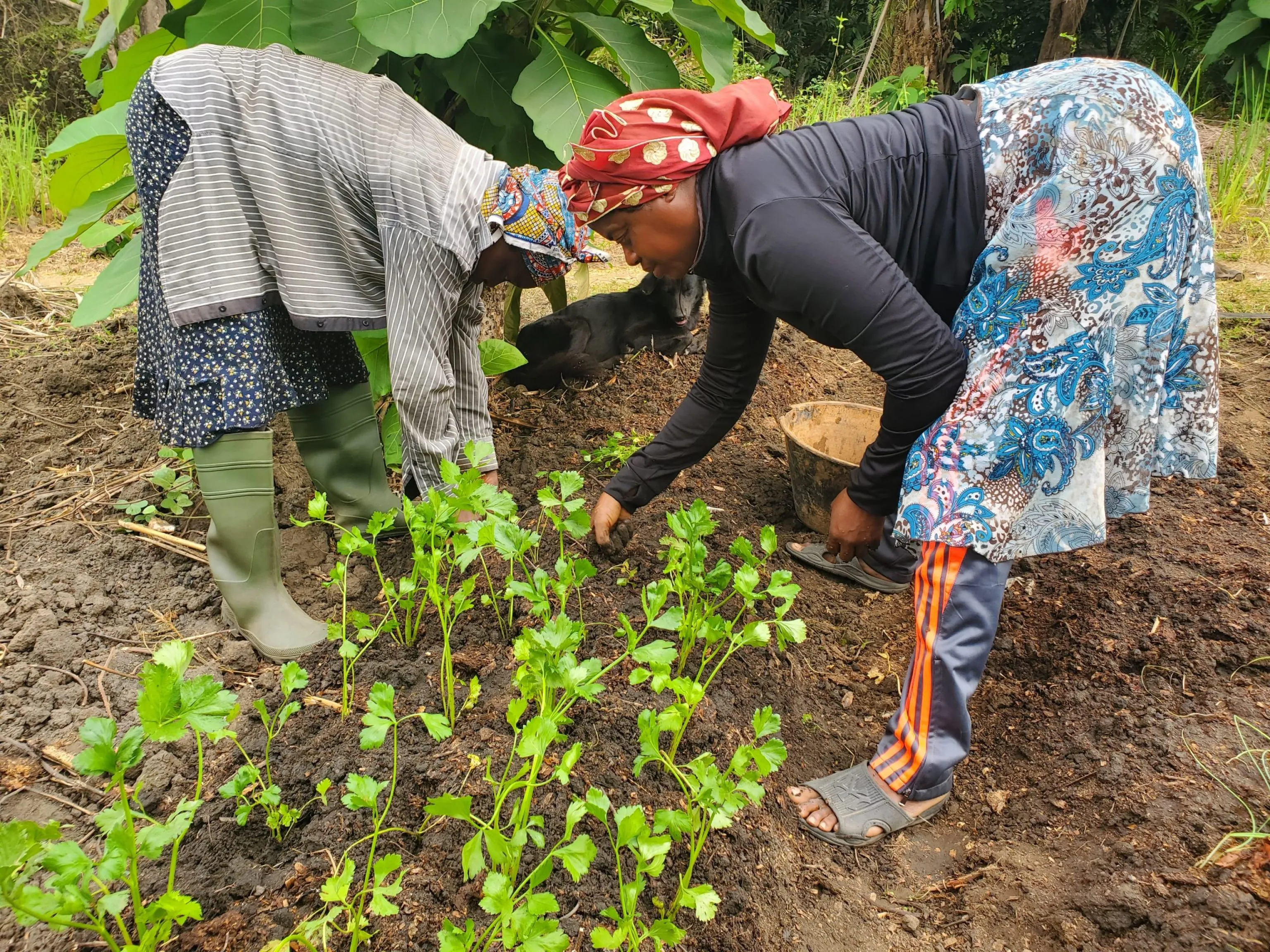
This first phase establishes the basics of agroecology through training activities and the creation of initial pilot plots. These test sites, designed and managed jointly with farmers, quickly become spaces for collective learning and demonstration. This gradual onboarding process is essential to secure community engagement and buy‑in.
Phase 2 – Technical deepening: introducing practices adapted to the Sahel
With support from the setec Foundation, the project then introduces advanced soil restoration techniques suited to Sahelian climatic conditions. The goal is not only to provide tools, but to help producers understand the ecological mechanisms at play, enabling them to adapt and transmit these practices.
Phase 3 – Soil regeneration: achieving concrete results on degraded lands
Applying these techniques to priority degraded areas yields visible results: improved soil structure, better water retention, and a gradual return of fertility. These tangible transformations reinforce community confidence and adoption.
Phase 4 – Governance and valorization: strengthening local economic autonomy
Agroecology can only be sustainable if it fits within a viable economic model. This phase strengthens short food chains, organizes local marketing, and supports community‑based governance. Farmers become key economic actors, able to valorize their production and sustain the approach over time.
Phase 5 – Capitalization and scaling‑up: sharing, transmitting, spreading
The final phase focuses on documenting, narrating, and disseminating best practices. The aim is to inspire other communities, stimulate replication, and embed the project in a broader territorial impact dynamic.
Project objectives
A project designed to transform agricultural practices sustainably for the benefit of local communities
The project goes beyond technical solutions: it seeks to restore communities’ capacity for action by valuing their knowledge, strengthening autonomy, and promoting resilient practices adapted to the Sahel. By directly supporting 200 farmers—70% of them women and youth—and reaching nearly 800 people indirectly, the project contributes to building a safer, more productive, and more environmentally respectful agricultural future.
Its strength lies in the coherence and intelligence of its phased approach, conceived as a pathway of agroecological learning. Each phase prepares the next, fostering gradual ownership, skills development, and long‑term behavioral change.
A sustainable model carried by the communities, for the communities
The project aims not only to “do better,” but to do differently. By involving communities from the very beginning and throughout the process, it recognizes their central role in the agroecological transition. Beneficiaries are not passive recipients: they are co‑designers, experimenters, and future knowledge bearers.
With a long‑term, structured, and progressive methodology, the project lays the foundations for a resilient, replicable model deeply rooted in the territory—one in which soil restoration, knowledge transmission, economic autonomy, and local governance work together to ensure food security and preserve resources.
Expected impacts
The project generates significant environmental, social, economic, and societal impacts, strengthening the long‑term resilience of Ngong’s communities.
Environmental impacts
The project restores local ecosystems using agroecological techniques adapted to the Sahel. Regenerating 10 hectares of soil, using large quantities of bio‑inputs, and creating a local seed bank boost soil fertility, biodiversity, and sustainability. Improved water management—through 20 functional micro‑basins—ensures better water availability on half of the targeted plots, mitigating drought effects.
Social impacts
Supporting 200 farmers—mostly women and youth—enhances local skills and economic empowerment. Beneficiaries adopt new practices sustainably, while newly trained agroecological facilitators ensure knowledge transmission. Crop diversification (+25%) improves household food security.
Economic impacts
Thanks to reduced input costs (-20%), improved yields (+20% per hectare), and access to agroecological markets, farmers’ incomes increase by 15–30%. Short food chains further allow at least 20% of production to be sold at fair prices.
Societal impacts
By establishing two local governance committees and ensuring 50% female representation, the project reinforces community participation and women’s involvement in decision‑making. Traditional farming knowledge is highlighted in public events, strengthening community cohesion and engagement in climate action.
The role of the setec Foundation
The setec Foundation provides €21,700 in support to Action for Sustainable Development, dedicated specifically to the project’s second phase focusing on strengthening agroecological practices.
Project monitoring is carried out by Myriam Yemele‑Tonleu, engineer at setec bâtiment, with on‑the‑ground support from the Foundation’s ambassadors and colleagues in Camerooun.